Sewer Line Problems in the Pacific Northwest: What Homeowners Need to Know
Sewer lines are one of those things nobody thinks about until they stop working. And when a sewer line fails, it fails fast and it fails messy. Whether your home is connected to the municipal sewer system or transitioning from a septic system, understanding how your sewer line works and what can go wrong is essential knowledge for any Pacific Northwest homeowner.
Here's what you need to know about sewer lines, common problems in our region, and when to call a professional.
How Your Sewer Line Works
Your home's sewer line (also called a lateral) is the underground pipe that carries all wastewater from your home toilets, sinks, showers, dishwashers, and washing machines to either the municipal sewer main at the street or your septic tank on the property.
Most residential sewer laterals are 4 to 6 inches in diameter and run anywhere from 10 to 100+ feet depending on how far your home sits from the street or septic tank. They're buried underground, typically 2 to 6 feet deep, and are designed to be gravity-fed meaning waste flows downhill through the pipe by gravity alone.
Because they're underground and out of sight, sewer lines are one of the most neglected systems in a home and one of the most expensive to repair when problems are ignored.
Common Sewer Line Problems in Pierce County
Tree Root Intrusion
This is the single most common cause of sewer line damage in the Pacific Northwest. Our region's abundant trees, firs, maples, alders, cedars, have aggressive root systems that naturally seek out moisture. Sewer lines are a prime target.
Roots enter through tiny cracks or loose joints in older pipes, then grow inside the pipe, eventually causing partial or complete blockages and, in severe cases, crushing the pipe entirely. Homes with clay or cast-iron pipes (common in homes built before the 1980s) are especially vulnerable.
Signs of root intrusion: Slow drains, gurgling toilets, recurring clogs despite snaking, and sewage odors in the yard.
Pipe Corrosion and Deterioration
Older homes in Puyallup and surrounding communities may still have original sewer pipes made from clay tile, cast iron, or Orangeburg pipe (a pressed wood fiber pipe used from the 1940s through 1970s). All three materials deteriorate over time and are prone to cracking, collapsing, and joint failure.
PVC pipe, the modern standard, is far more durable and resistant to root intrusion and corrosion — but many older homes haven't been upgraded.
Bellied or Sagging Pipe
Over time, soil can shift, settle, or erode beneath a sewer line, causing sections of the pipe to sag or "belly" downward. Waste and solids collect in these low spots instead of flowing through, leading to chronic clogs and eventual backups.
This is a common issue in our region due to the heavy rainfall, clay-heavy soils, and ground movement that characterize Pierce County's geography.
Grease and Debris Buildup
Grease, soap scum, and non-flushable items (wipes, paper towels, feminine hygiene products) accumulate on pipe walls over time, narrowing the diameter and restricting flow. This is especially common in older homes where pipes have decades of buildup.
What not to flush or pour down drains: Cooking grease, "flushable" wipes (they're not truly flushable), paper towels, medications, and coffee grounds.
Offset or Separated Joints
Ground movement, frost, and soil settling can cause pipe joints to separate or become misaligned. This allows sewage to leak into the surrounding soil, creating contamination and sinkholes, and allows more root intrusion.
Septic to Sewer Conversion: Is It Right for You?
Many properties in Pierce County sit in areas where municipal sewer service has recently become available — or will be soon. Converting from a septic system to city sewer is a major project, but it has real advantages:
- Eliminates ongoing septic maintenance costs (pump-outs, inspections, repairs)
- Adds property value — municipal sewer is often preferred by buyers
- Removes liability from a failing or aging septic system
- Required in some cases when a septic system fails and sewer is available
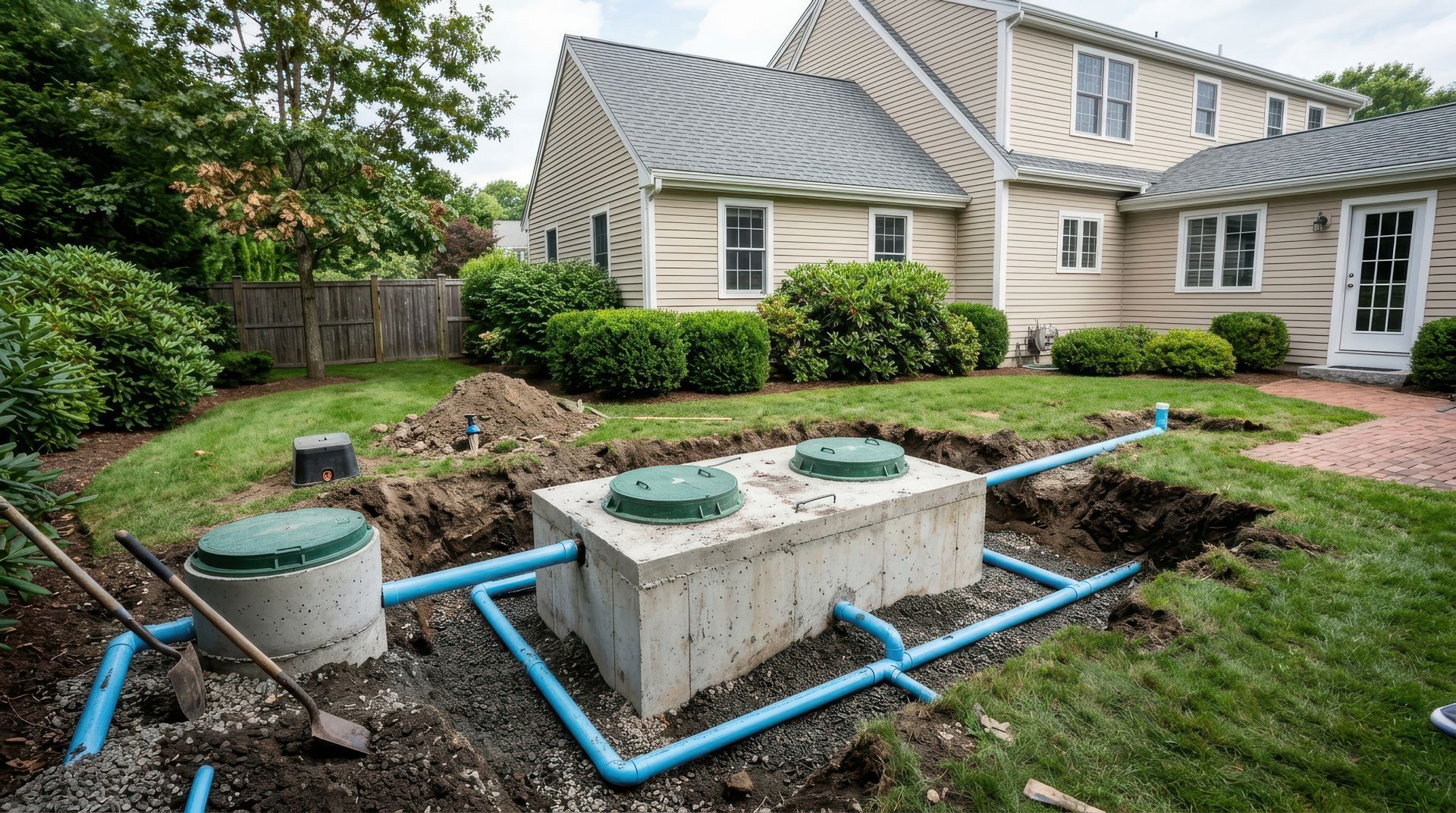
The conversion process involves decommissioning and abandoning your existing septic system, installing a new sewer lateral from your home to the city main, and coordinating permits with your local municipality.
Raburn Contracting Services handles the entire conversion process from permit application through excavation, pipe installation, and final inspection. We've helped dozens of Pierce County homeowners make the switch smoothly.
New Construction Sewer Installation
Building a new home or structure in Pierce County? Sewer line installation is one of the most critical early steps in site development. Getting it right the first time proper slope, pipe material, depth, and connection prevents costly repairs down the road.
RCS performs new sewer lateral installations as part of our full site development services, coordinating with engineers, municipalities, and inspectors to ensure everything is installed to code.
Warning Signs Your Sewer Line Needs Attention
Don't wait for a full backup. Watch for:
- Multiple slow drains throughout the home simultaneously
- Gurgling or bubbling from toilets or drains
- Sewage odors indoors or in your yard
- Water backing up in the lowest drain in your home (often a basement floor drain or first-floor toilet)
- Wet, sunken, or unusually green patches of grass over where your sewer line runs
- Recurring clogs that keep coming back despite snaking
Any of these symptoms warrants a professional inspection. Many contractors now offer sewer camera inspections a small camera fed through your pipe to identify the exact problem without unnecessary digging.
What Does Sewer Line Repair or Replacement Cost?
Costs in Pierce County vary based on pipe length, depth, access, and method:
- Sewer camera inspection: $200–$500
- Hydro-jetting (clearing roots/buildup): $300–$600
- Spot repair (single section): $1,000–$3,000
- Full sewer line replacement: $4,000–$15,000+
- Septic to sewer conversion: $8,000–$25,000+ depending on distance to city main
Getting an inspection early almost always costs far less than waiting until a full failure.
Why Choose RCS for Sewer Work in Pierce County?
Sewer work requires excavation, permitting, and precision it's not a job for a general handyman. Raburn Contracting Services brings licensed excavation and contractor expertise to every sewer project, handling everything from the permit paperwork to final backfill and cleanup.
We're a local, family-owned company. We work on your property like it's our own, and we communicate clearly throughout the entire process so there are no surprises.
📞 Call (253) 204-5090 to schedule a free estimate 🌐 rcs-wa.com
Raburn Contracting Services LLC — Sewer Installation, Repair & Septic-to-Sewer Conversion in Puyallup, WA and Pierce County.
Recent Posts